

Global support for Palestinian causes is increasing, including the film industry, where numerous of film workers have joined a pledge to boycott Israeli cinema organizations deemed involved in the conflict in Gaza, and high-profile stars are backing movies that center the Palestinian lived reality.
However, Palestinian-produced movies continue to struggle to obtain release and achieve visibility – even after a significant Oscars victory last year. To highlight the Palestinian vibrant tradition of film-making, we invited leading Palestinian film-makers and artists to discuss their favorite Palestinian movies.
‘It Brought Me to Tears’: Mo Amer Reflects on All That’s Left Of You
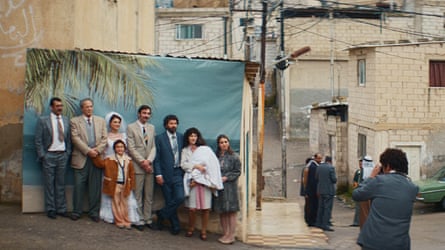
Director Cherien Dabis’s movie All That’s Left of You, which debuted this year at the Sundance Film Festival, is a unique cinematic work, bold and memorable. By portraying the narrative of a single Palestinian clan, from its origins in pre-Nakba Jaffa through generations of displacement, it does not just recount a story – it celebrates a heritage.
The visuals are rich and transportive. Every shot feels intentional, every frame a memory – the citrus orchards of Jaffa, the roads of Nablus, the alienation of exile. The performances are powerful, showcasing Dabis’s extraordinary versatility alongside three generations of the Bakris – the family of actors most synonymous with Palestinian cinema. They are complex, restrained and heartbreakingly real.
The most striking aspect is how smoothly the film moves between different eras without ever breaking its emotional throughline. Every period of the Palestinian history is depicted with remarkable detail, both in imagery and in feeling. The filmmaking is skillful in that regard, guiding you through time with precision and sensitivity.
By the end, I was moved to tears. All That’s Left of You isn’t just about the past, it’s about the unseen manners it influences who we are. It’s a film that stays with you – not because of drama, but because of truth.
- Mo Amer is a Palestinian American actor and comic and the maker of a well-known streaming show.
‘A Groundbreaking Masterpiece’: Cherien Dabis on Divine Intervention

A sunglasses-clad Palestinian female defiantly walks through a checkpoint. Israeli soldiers look on, weapons pointed, confused. Her presence disarms them and brings the watchtower crashing down. It’s an memorable moment from Elia Suleiman’s Divine Intervention that has stayed with me ever since I first saw the film. I was a second-year postgraduate film student at Columbia University when it opened in the United States in 2003. I remember being amazed by its power, its defiance, and its pure boldness.
During an era when the majority of Palestinian cinema tended to be the solemn or tragic, Suleiman created a fresh direction. Through dark humor, straight-faced performance, and almost silent observation, he captured the surreal ridiculousness of existence under occupation. Portraying the film’s silent main character himself, he placed his own perspective at the heart of the story. That decision felt revolutionary. His presence was calm and understated, which only heightened the stress all around him.
Divine Intervention is both intimately personal and politically charged. Its imagery is universal, yet rooted in the fractured reality of Palestinian identity. The filmmaker turns disconnection, exile and defiance into something approaching poetry. The result is poignant, dreamlike, at times funny and consistently painfully truthful.
There existed nothing similar to it in Palestinian film at the time. It remains unique. It continues to be, for me, the most wildly original and imaginative Palestinian-made movie ever made.
- Cherien Dabis is a Palestinian American director, screenwriter, producer and actor, whose most recent film is an official submission for the Oscars.
‘Palestine Has Gained a Talent’: Hany Abu Assad on To a Land Unknown
In my view, a great movie needs to do two things. It needs to deliver an experience that’s unfamiliar, emotional and smart. It needs to offer me an element I’ve been lacking – a perspective that challenges my views, a way to think about topics outside my own life, a window to a distinct time and place. Simply put, I need to feel enriched, in spirit and intellectually.
Second, it needs to move me with its skill. A ability that is not busy trying to impress but is used to reveal to something more important.
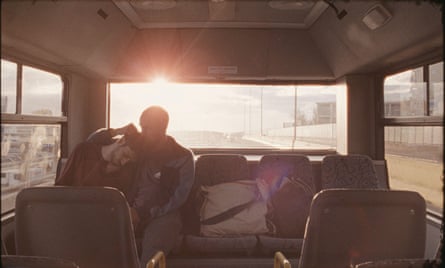
The movie To a Land Unknown, which was released recently, is precisely this type of film. Made by director Mahdi Fleifel, it is a story about two Palestinian companions looking for improved futures as refugees in Greece.
To a Land Unknown made me feel what it’s like to be a vulnerable migrant, in a foreign land, where all factors acts in opposition to your efforts to escape the ghetto. It showed me that in certain situations, although circumstances beyond your control work to hinder you, you personally can still become your own worst enemy. And its dance between content and visual form astonished me in its artistry.
In To a Land Unknown, Palestine has gained a talent that will serve its cause without shedding a single drop of blood.
- Hany Abu-Assad is a Palestinian-Dutch filmmaker, writer and two-time Academy Award contender for his celebrated films.
‘It Shows Israel Views Even Cows as a Threat’: Basel Adra on The Wanted 18
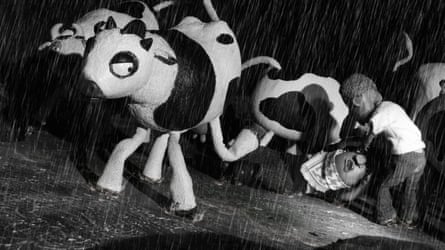
One of my favorite Palestinian movies is The Wanted 18. It tells the story of Palestinian people in Beit Sahour, a village near the city of Bethlehem in the occupied West Bank, during the first intifada of the 1980s. It documents their effort to {


